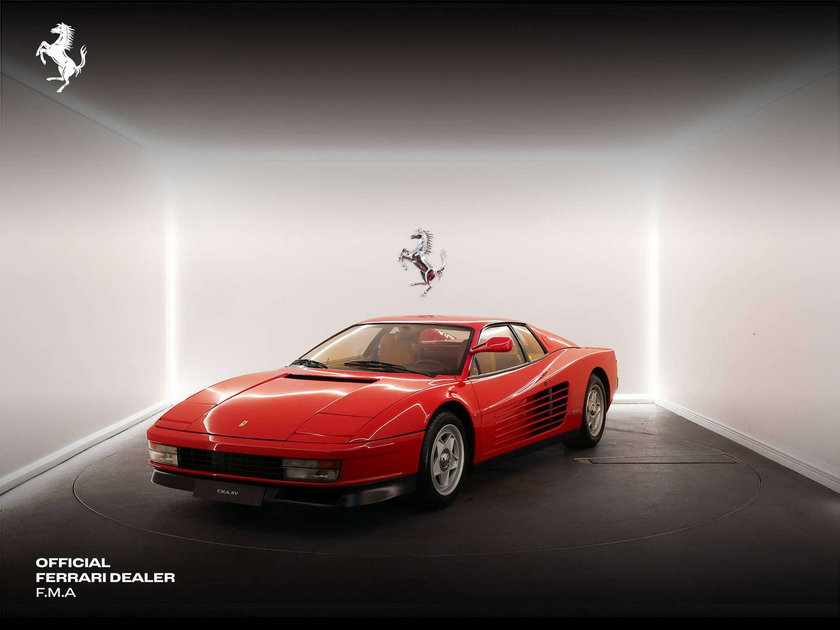
 Monospecchio / Monodado
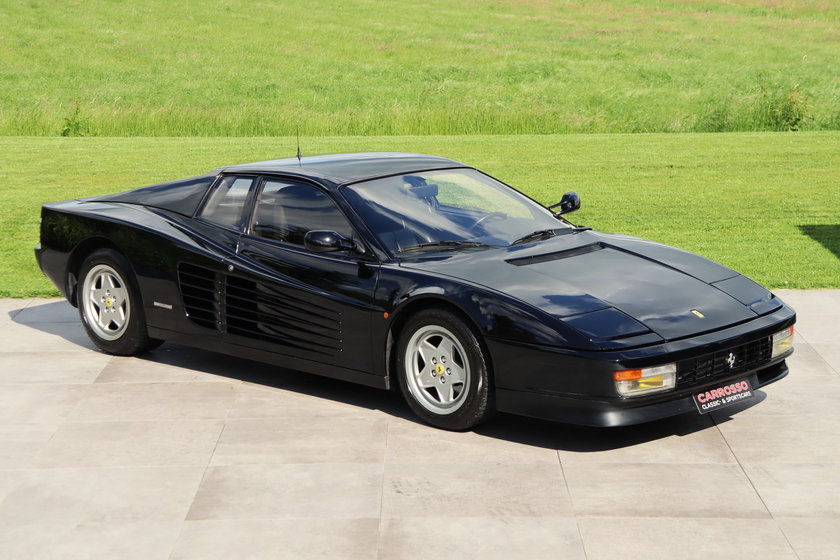
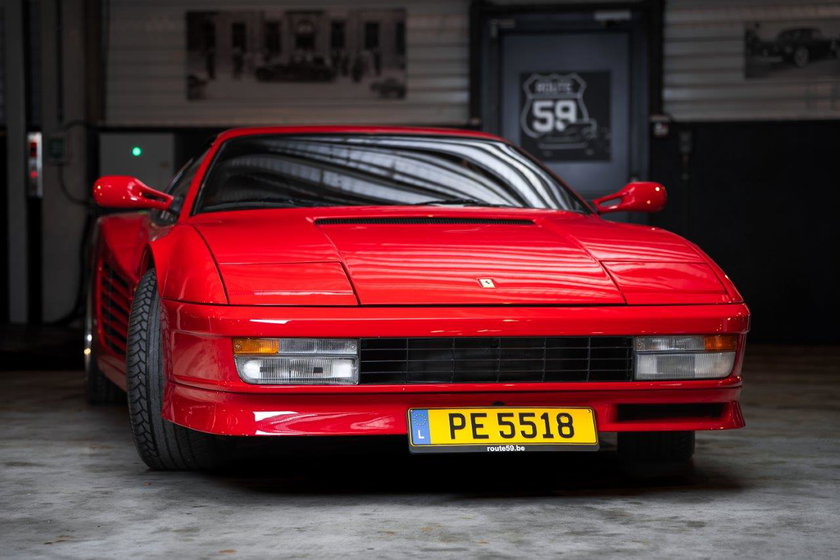
Ferrari Testarossa
Share this vehicle
-
 15
15
-
-
-
-

Share this vehicle
General information
-
Second hand -
No -
Ferrari -
Testarossa -
nd -
nd -
nd -
nd -
nd
Vehicle history
-
37.100 km -
03/1991 -
nd -
nd -
nd -
nd
Technical specifications
-
Manual -
5 -
390 HP -
nd -
5000 -
8 -
nd -
nd
Energy consumption
-
nd -
nd -
Petrol
Aesthetics
-
Red -
Black -
No -
Leather
Equipments
Pas de données disponibles
Description
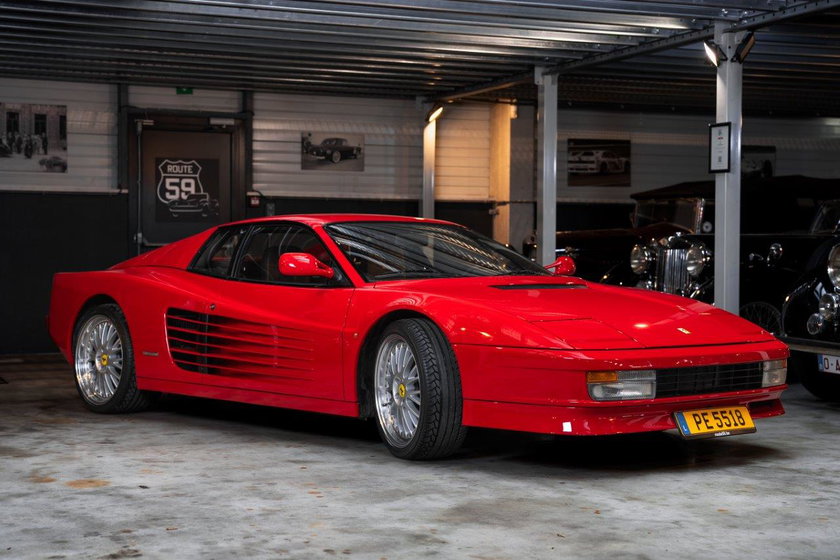
Presented at the Paris Motor Show in 1984 as the successor to the 512 BBi, the Ferrari Testarossa became one of the most iconic Ferraris of its era. Designed by Pininfarina under the direction of Leonardo Fioravanti, it was a radical departure from its predecessor, boasting a spectacular, very wide and very low profile, dominated by its famous slatted side air intakes. These were not merely a stylistic feature: they fed the radiators, now positioned on the sides, an architecture that directly contributed to the car's distinctive proportions.
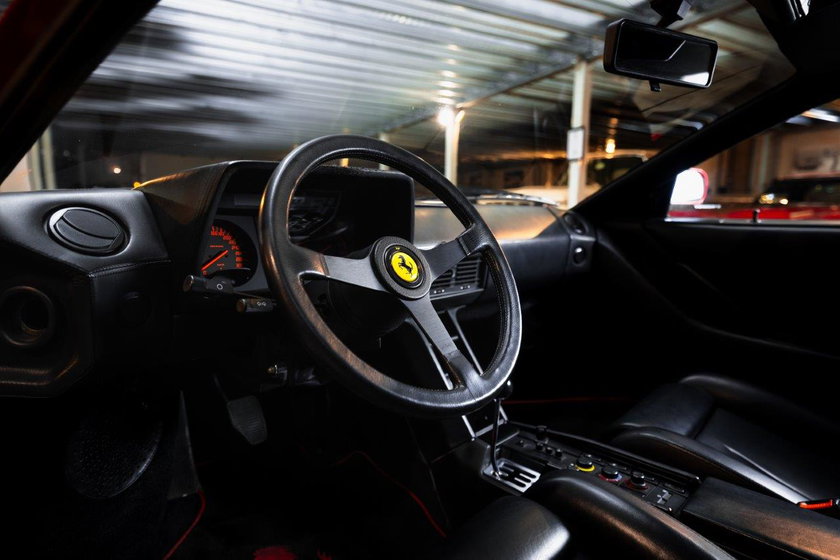
Behind the two occupants sits the famous 4,943 cc Ferrari flat-12 engine, derived from the Berlinetta Boxer line. Fed by Bosch fuel injection and paired with a five-speed manual gearbox, it develops approximately 390 hp in its European configuration. The Testarossa thus offers performance that was exceptional in the mid-1980s, with a top speed approaching 290 km/h, while proving more practical and civilized than the 512 BBi it replaced.
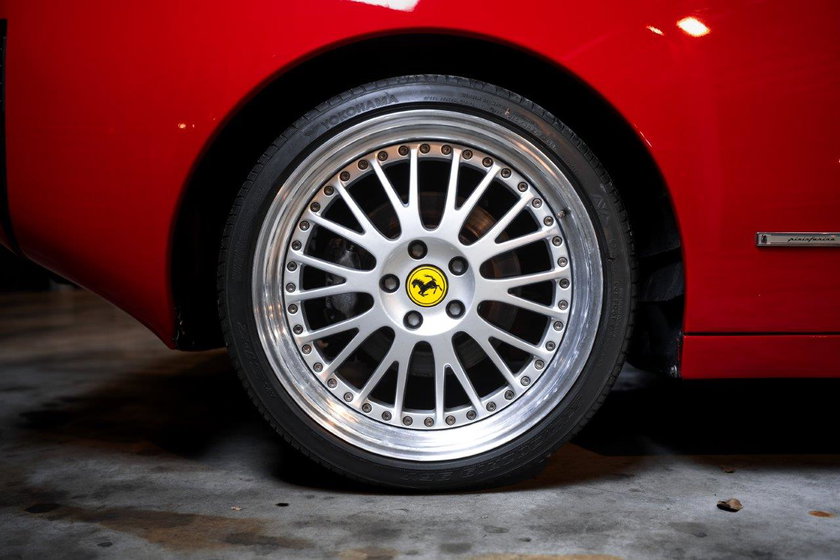
Its long career was marked by several evolutions. The very first cars, now nicknamed "Monospecchio," had a single rearview mirror mounted high on the windshield pillar. These were followed by versions with two mirrors, and then by a final evolution commonly known as the Series 3, recognizable in particular by its five-lug wheels, which replaced the center-lock wheels of the early Testarossa models. Produced until 1991, these last cars benefited from all the improvements made to the model throughout its production run and represent the ultimate development of the original Testarossa before the arrival of the 512 TR in 1992.
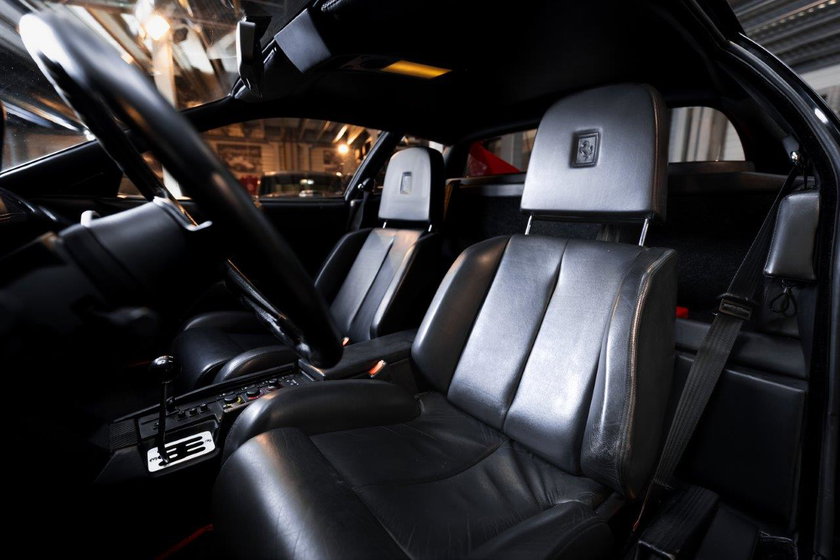
The example shown here, chassis number ZFFAA17B000091628, is precisely one of these Testarossa Series 3s, produced in 1991 to European specification and with left-hand drive. The F-Register lists chassis 91628 in its Rosso Corsa FER 300/12 Glasurit configuration with a Nero A8500 interior, a combination that is certainly the most iconic for this model.
Its original logbook allows us to trace its early history with remarkable precision. The car was delivered new on October 30, 1991, by Ferrari Autohaus Ulrich GmbH in Frankfurt, Germany. The first owner recorded in the logbook was Horst Krug, residing in Bad Homburg. The date of October 30, 1991, is also recorded in the administrative documents and the Belgian Car-Pass as the date of first registration.
The Ferrari service booklet also contains several records of its maintenance. These include a service visit to the dealership network on August 12, 1998, at 16,239 km, followed by another service on February 4, 2000, at 23,587 km. These early records are particularly valuable as they allow us to document the car's mileage from the earliest years of its ownership.
The Testarossa will subsequently be moved to Belgium. Its file includes a certificate of conformity issued in 2018 by Francorchamps Motors Brussels, clearly identifying the car as a Ferrari F110AB/E Testarossa, chassis ZFFAA17B000091628. Its Belgian mileage history is also documented: the Car-Pass records 36,992 km on March 7, 2018, then 37,054 km on December 8, 2025, confirming the very low mileage covered during this period.
In 2025, the car underwent a particularly extensive mechanical overhaul, going far beyond simple routine maintenance. The cylinder heads were removed to clean the valves and lap their seats, with the valve stem seals replaced. A major service was carried out, including the replacement of filters, belts, and engine and gearbox oils. The spark plugs and their extensions were also replaced. The cooling system was overhauled, with the radiators, which showed signs of corrosion, being repaired, and four new exhaust/catalytic converter valves were installed.
The braking and clutch systems also received special attention, with the replacement of both the clutch and brake master cylinders. The fuel system underwent a major overhaul: the fuel tank was cleaned, and new fuel pumps and injectors were fitted. The mass airflow sensors were also serviced before the injection system was adjusted.
Finally, the chassis hasn't been neglected: the hydraulic shock absorber system has been overhauled and the shock absorber bushings replaced, as well as some of the suspension arm bushings. This is therefore a particularly comprehensive mechanical overhaul, encompassing the engine, fuel system, cooling system, exhaust, brakes, clutch, and running gear. It also still retains its original wheels.
This Testarossa therefore brings together several particularly interesting elements: a 1991 Series 3, among the last evolutions of the original Testarossa, a desirable European specification, its Rosso Corsa and Nero configuration listed by the F-Register, its original logbook allowing us to trace it back to its first German owner, several documented early mileages, a Belgian history and, above all, an exceptionally significant mechanical overhaul carried out in 2025. More than forty years after its presentation, the Testarossa remains one of the most immediately recognizable silhouettes in Ferrari's history and, without a doubt, one of the automobiles that best embodies an entire era.
Contact seller
Get in touch directly with the seller to obtain all the necessary information.
Buyer ?
Ask the seller for your Car-Pass !
Seller ?
Don’t forget to give the Car-Pass while selling your vehicule.
This is a legal and mandatory document. For more info

Gocar, your all-in-one automotive hub
A marketplace to buy or sell, a news platform to stay updated, and a directory to easily find trusted professional garages near you.